Work sample tests vs Realistic Job Assessments
Work Sample Tests and Realistic Job Assessments both aim to show how candidates will actually perform, not just what they claim. But they differ sharply in design, predictive value, and candidate experience.
This guide breaks down where each approach works and why Realistic Job Assessments are better suited to fair, consistent, high-volume hiring.
Included:
Quick comparison: Realistic Job Assessments vs work sample tests vs specific ability tests for candidate testing and selection
| Feature | Specific ability tests | Work sample tests | Realistic Job Assessments |
|---|---|---|---|
| Best for | Early stage screening, learning potential, broad talent pools | Validating specific skills or technical tasks within a defined role | High volume, entry level or frontline hiring where job fit, commitment and readiness drive outcomes |
| Assessment format | Standardised tests measuring capability such as numerical, verbal, mechanical or spatial ability | Simulated tasks reflecting individual job skills or activities | Interactive, scenario based simulations that reflect the full job experience |
| What is measured | Underlying capability and learning potential relevant to role success | Ability to complete a specific task or demonstrate a defined skill | Behaviour, decision making, job fit, pressure handling and real world readiness |
| Predictive validity | High general predictive validity across roles but indirect and abstract | Moderate task level validity that does not always generalise to full role performance | High predictive validity for on the job performance and early retention due to behavioural realism |
| Scope of assessment | Broad but not job specific in content | Narrow, focused on a slice of the role | Broad, covering end to end role demands and working conditions |
| Candidate experience | Test like and abstract, job relevance may be unclear | Task focused and performance led, can feel high pressure | Immersive and transparent, showing what the job is actually like |
| Expectation setting | Low, limited insight into shift patterns, location, pay or pace | Limited, shows tasks but not full working reality | Strong expectation alignment through visibility of role location, shifts, pace, pay and job realities |
| Fairness and bias | Highly standardised scoring, may feel less job relevant unless well contextualised | Assessor interpretation and scoring differences can introduce inconsistency | Standardised, job relevant behaviour based scoring reduces subjective bias when well designed |
| Scalability | Easy to scale across large applicant volumes | Scales with effort and resources, often slower at volume | Designed for high volume hiring with consistent delivery and scoring at scale |
| Cost model | Low cost per candidate once selected, typically priced per test or licence | Ongoing costs for assessors, scheduling, scoring, training and logistics | Upfront design investment with low marginal cost per additional candidate |
| Role in the hiring process | Early screening signal to prioritise who progresses | Validation step for shortlisted candidates or key skills | Early stage screening and expectation setting to reduce mis hires and attrition |

What are work sample tests in recruitment?
Work Sample Tests are assessments where candidates perform tasks that replicate key job functions. For example: data entry sample, tool operation, writing a standard email to a client, or composing a report.
They’re valuable because they close the gap between “Can this person do X skill?” and “Will this person perform it on the job?”
However, their limitation is often scope: they show a slice of the job, but not the full behaviour and context of what success really looks like in-role.
Where work sample tests shine
Roles that require a specific technical or procedural skill.
Situations where you need to validate proficiency such as spreadsheet work, software use, or machine operation.
Smaller hiring volumes where assessments can be manually reviewed and scored without creating bottlenecks.
Where work sampling tests fall short
They do not scale well for high volume hiring. Reviewing, scoring, and quality controlling large numbers of work samples quickly becomes slow, expensive, and inconsistent
Candidates may pass the task but still struggle with real world pressures, pace, culture, or expectations once hired.
Behavioural signals are limited and hard to standardise, making it difficult to compare candidates fairly across large cohorts
What are Realistic Job Assessments (RJA)? (And when would you use a RJA instead?)
High volume entry level or frontline hiring where hundreds or thousands of candidates need to be assessed consistently.
Situations where scalability matters and manual review would slow hiring, increase cost, or introduce inconsistency.
Organisations that need fair, standardised assessment based on job relevant behaviour rather than subjective judgement.
Roles where success depends on decision making, prioritisation, pace, and handling pressure not just task execution.
Jobs with fixed realities like shift patterns, locations, pay structures, or physical demands that candidates must understand before accepting.
Why RJAs significantly reduces attrition compared to work sampling tests
Candidates see the reality of the role upfront, including schedules, working environment, pace, and expectations.
People self-select out early when the job does not match what they want or can commit to.
Fewer hires accept offers based on assumptions, only to leave weeks later when reality hits.
Early turnover drops because those who accept already know what the job actually involves.
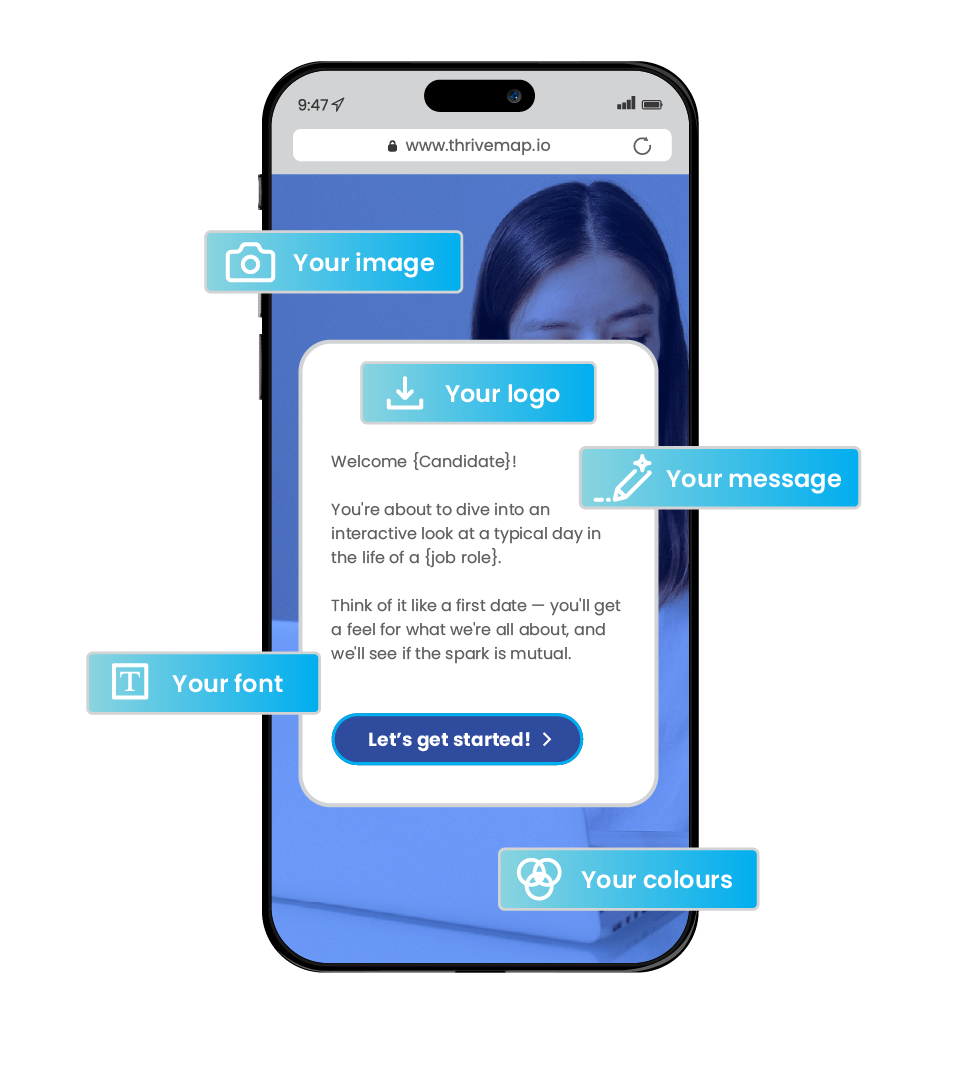
6 reasons Realistic Job Assessments beat work sample tests for entry level hiring
They assess the whole job, not just isolated skills
Work sample tests show whether someone can complete a task. Realistic Job Assessments go further by assessing how candidates make decisions, manage pressure, prioritise work, and respond to real scenarios across the role.
They set expectations about the realities of the job upfront
RJAs expose candidates to shift patterns, locations, pay structures, pace, and working conditions. This prevents people accepting roles they do not truly understand, one of the biggest drivers of early attrition in entry level hiring.
They scale cleanly for high volume hiring
Work sample tests become slow, expensive, and inconsistent as volumes grow. RJAs are designed to handle hundreds or thousands of candidates with standardised delivery and scoring, without assessor bottlenecks.
They are fairer and more consistent at scale
Because all candidates experience the same scenarios and are scored against the same behavioural criteria, RJAs reduce variation caused by assessor judgement, interpretation, or inconsistent task review.
They lower total hiring cost, not just cost per assessment
While work samples can look cheaper on paper, they often increase downstream costs through manual review, extended hiring timelines, and early turnover. RJAs reduce wasted interviews and mis hires by filtering earlier and more accurately.
They reduce early attrition by aligning expectations before day one
Candidates who complete a Realistic Job Assessment know what the job involves before they accept. Those who proceed are more likely to stay, perform, and commit because the reality matches what they signed up for.
Example: How goeasy replaced work samples with Realistic Job Assessments
goeasy Realistic Job Assessment transformation
1,000+ entry-level hires per year
Work sample testing meant paid trials, manager time, and high per-candidate assessment costs
Slow, manual evaluation that did not scale with hiring demand
goeasy replaced work sample tests with ThriveMap Realistic Job Assessments, moving assessment upstream and online.
Candidates self-selected out after seeing real job realities like shifts, pace, and location
Recruiters screened at scale with standardised, behaviour-based scoring
Assessment and hiring costs dropped while early attrition reduced
Outcome: higher volume hiring, lower cost per hire, and better expectation alignment before day one.

Final verdict: Which candidate assessment method – work samples or Realistic Job Assessments delivers the most accurate, cost-effective process?
Work Sample tests are best for:
- Skilled or specialist roles with clear technical demands.
- Hiring where you already know behaviour and motivation are strong, and you need to validate a key skill.
- Firms focusing on skill-fit rather than volume-fit.
Realistic Job Assessments are best for:
- High-volume, entry-level or frontline hiring where fit, commitment and expectation alignment matter most.
- Organisations with high early attrition and hiring cost pressures.
- Teams needing a standardised, fair and predictive filter for large applicant pools.
Need entry-level, high-volume hiring assessments that cut attrition? That’s ThriveMap.
Modern. Candidate-first. Built around your roles.
Assessments the way they should be.

FAQs:
Both aim to predict performance, but they do it at very different levels.
Work sample tests are predictive of how well a candidate can perform a specific task. They work well when success in the role depends heavily on a narrow technical skill.
Realistic Job Assessments are more predictive of overall job performance because they assess behaviour across real scenarios. They capture how candidates make decisions, prioritise work, handle pressure, and respond to the pace and context of the role.
Crucially, RJAs also predict retention, not just task success. By showing candidates what the job is actually like before they accept, they reduce early attrition caused by mismatched expectations. For high volume and entry level roles, this makes RJAs consistently more predictive of real world outcomes.
Yes: work samples are often a component of a Realistic Job Assessment.
RJAs build on the logic of work sampling but take it several steps further. Instead of testing a single task in isolation, RJAs embed tasks within realistic scenarios that reflect the pressures, trade offs, and decisions of the job.
They also introduce commercially critical context such as shift patterns, job location, pace of work, pay structure, and working conditions. This closes the candidate expectation gap that causes many early leavers to quit within weeks of joining.
In short:
Work samples show whether someone can do the work.
RJAs show whether they want to do the work and will stay.
Work sample tests focus on task execution.
Realistic Job Assessments simulate the whole job experience.
RJAs assess:
-
Decision making under pressure
-
Prioritisation and pace
-
Behaviour in realistic scenarios
-
Understanding of shifts, location, pay, and working conditions
This difference matters because many entry level hires do not fail due to lack of skill. They leave because the job is not what they expected. RJAs reduce this risk by ensuring candidates self select with full knowledge of the role before they accept.
The result is fairer hiring, better performance, and significantly lower early attrition.